
Bat Removal Services in Wallingford, PA
Seitz Wildlife Services is a fully licensed, family-owned and operated company providing bat removal and wildlife control throughout Wallingford, Nether Providence Township, and the surrounding Delaware County area. We handle the full range of bat situations property owners run into — bats in an attic, bats in a chimney, bats roosting behind shutters and trim, and bats flying through living space. Our services also include bat guano and dropping removal, attic clean-outs, insulation replacement, bat house installation, and bat proofing, also known as bat exclusion.
Wallingford sees heavier bat activity than a lot of comparable Delaware County communities, and the reason is water. The township sits between two creek corridors — Crum Creek along the eastern edge and Ridley Creek to the west — with wooded floodplain, steep shaded banks, and mature hardwood canopy running the length of both. Moving water and wooded bottomland produce insects in enormous volume at dusk. Bats work those corridors all night, and when the sun comes up they need a dry, dark roost within easy flying distance. The large older homes set back on Wallingford’s wooded lots are the nearest thing available. If you’re dealing with a bat intrusion in Wallingford, contact Seitz Wildlife Services for a free phone consultation.
How Bats Get Into Wallingford Homes
Wallingford grew up as a railroad suburb along the Media line, and the housing reflects it. Bats get in through different failures depending on which era your house belongs to.
Early twentieth-century Craftsman and Arts and Crafts homes. These are the houses that give Wallingford its character, and their detailing is unusually generous to bats. Deep overhanging eaves, exposed rafter tails, decorative brackets, cedar shake and shingle siding, and large louvered gable vents all create sheltered gaps at the roofline. The gable louvers are the single most common entry point we find on this style — the screening behind them is frequently original, rusted through, or missing entirely, and a bat needs less than an inch. Attic volume in these homes is large and temperature-stable, which is exactly what a maternity colony is looking for.
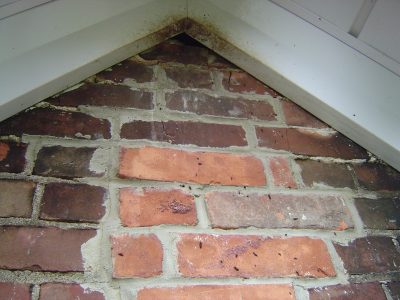
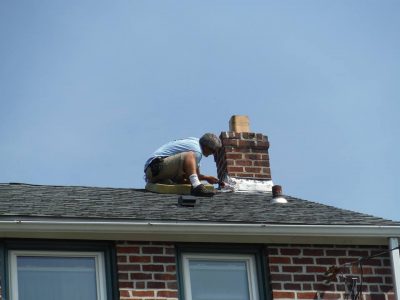
Stone and stucco colonials. The 1920s through 1940s homes throughout Nether Providence tend to fail at the seams: chimney flashing, roof valleys, the joint where a slate or tile roof meets a stone gable end, and the gaps that open where an addition was tied into the original structure.
Post-war ranches and split-levels on wooded lots. Much of the later development in Wallingford placed homes directly against mature tree cover, which puts the roofline within reach of overhanging limbs and keeps it shaded and damp. These homes fail at ridge vent ends, soffit and fascia gaps, and construction seams around dormers — and the tree contact accelerates the wood rot that opens those gaps in the first place.
Because so many Wallingford properties sit under heavy canopy, trimming limbs back from the roofline is a genuinely useful preventive step here in a way it isn’t in more open communities.
Signs of a Bat Infestation in Wallingford, PA
Bats are quiet and nocturnal, so a colony can occupy an attic for an entire season before anyone realizes. The most common signs Wallingford homeowners report:
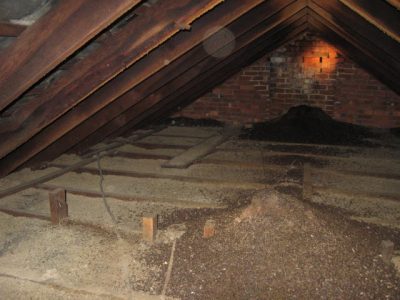
- Droppings, called guano. Small, dark, crumbly pellets that collect in piles below entry points — along a foundation, on a windowsill, on a deck rail, on the driveway beneath a gable. In an attic, guano accumulates directly under the roost.
- Staining and rub marks. A brown, greasy discoloration where bats squeeze through the same opening night after night. On shingle siding and painted trim it’s often visible from the ground.
- Sound. Scratching, rustling, or high-pitched chittering from an attic or wall cavity, loudest around dusk and again before dawn.
- Odor. A strong ammonia smell from accumulated guano and urine, usually most noticeable in warm weather.
- Bats circling the house at sunset. Standing outside and watching your own roofline for the first twenty minutes after sundown is the most reliable way to locate an entry point. Bats emerging from the structure look very different from bats simply hunting overhead.
Why Bats in Your Attic Are a Health Concern
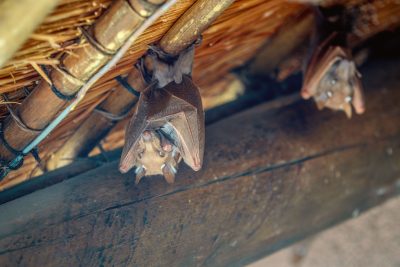
Bats are beneficial animals and we remove them without harming them, but a colony living inside a house is a real problem that shouldn’t be ignored.
The main concern is accumulated guano. As it builds and dries, it can support growth of Histoplasma capsulatum, a fungus whose spores become airborne when the material is disturbed. Inhaling those spores can cause histoplasmosis, a respiratory infection. That’s why we don’t simply sweep out an attic — guano removal is done with proper protective equipment and containment, and heavily soiled insulation is removed and replaced rather than cleaned.
Rabies is the question people ask about most. The large majority of bats do not carry it, but a small percentage do, and any direct contact between a bat and a person or a pet should be treated seriously and discussed with a doctor or veterinarian. Never try to catch or handle a bat yourself.
There’s also plain structural damage. Urine and guano saturate insulation, stain ceilings and drywall, and over several seasons can rot roof sheathing and framing. A long-standing colony usually means insulation replacement and repair work on top of the exclusion.
Bat Exclusion in Wallingford, PA
We don’t trap and relocate bats. The method that works is exclusion. We inspect the structure, find every opening the colony is using, seal all of them permanently, and fit the active entry points with one-way devices that let bats out and prevent them from getting back in. Once the structure is confirmed empty, the devices come off and those final openings are sealed. Then comes cleanup — guano removal, sanitizing, and insulation replacement where it’s warranted.
The timing is the part most homeowners don’t anticipate. In Pennsylvania, bat exclusions cannot be performed during the maternity season, roughly mid-May through August 1st. During that window the colony contains flightless pups. Sealing the adults out means the young starve inside the structure — inhumane, illegal, and a far worse outcome than the original problem, since you’re left with dead animals in an inaccessible space and adult bats pushing into living areas trying to reach them.
If you discover bats during the restricted period, it’s still worth calling. We can inspect the property, document the entry points, remove any bat that has gotten into living space, and have the exclusion scheduled for the first day the work can legally start. Hibernating bat populations across the Northeast have suffered severe losses from White Nose Syndrome, so avoiding additional harm to the species matters. Contact Seitz Wildlife Services to schedule your Wallingford bat exclusion at the right time of year.
Contact Seitz Wildlife Services
Seitz Wildlife Services is licensed, insured, and family-owned, serving Wallingford, Nether Providence Township, and communities throughout Delaware, Chester, Montgomery, and Berks Counties. Call (610) 999-2606 for a free phone consultation about bat removal at your Wallingford property.