
Bat Removal Services in Pennsylvania
Seitz Wildlife Services is a fully licensed, family owned and operated business providing Pennsylvania bat removal services and wildlife control. We are experts at handling a variety of situations involving bats, including bats in an attic, bats in a chimney, bats trapped behind shutters, or bats flying around your home or office. We also provide services such as bat guano or bat dropping removal, attic clean outs, insulation replacement, bat house installation, as well as bat proofing, also known as bat exclusion. If you are experiencing a bat intrusion in Pennsylvania, we invite you to Contact Seitz Wildlife Services Today for a free phone consultation. We are the bat experts!
Live Bat Removal
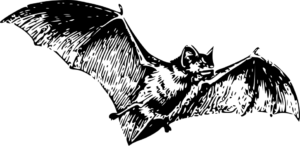
Pennsylvania Bat Removal Services
Pennsylvania is home to a large population of bats. Occasionally a single bat may find its way into your home or office and become trapped. In this scenario, trust the experts at Seitz Wildlife Service to provide our live bat removal services. It’s never a good idea to attempt to capture a bat yourself. Bats are potential carriers of rabies and physical contact with a bat should be avoided. If physical contact was made it may be a concern enough to capture the live bat and have it sent to the county health department to be tested for rabies. We will contain the bat in a box if need be for testing.
Professional Bat Exclusion
Bat exclusion is the process of inspecting and sealing a room, home, or building that has been infiltrated by bats in order to permanently prevent further invasions. Bats are very invasive and have the ability to fit themselves through extremely tiny gaps and crevices. It can be very difficult to identify all of the potential areas a bat can intrude your property. Hiring a professional bat exclusion service will ensure your property is professionally evaluated and correctly sealed to prevent further bat invasions.
If you are experiencing a bat infestation in a residential or commercial property we have the skills needed to evict the bats and prevent them from returning. In Pennsylvania, bats are very beneficial to our environment. Bats help to control the insect population and are also protected by law. We perform humane bat exclusion and do not condone the use of poisons or harmful chemicals. By use of a one way door, we allow the invading bats to exit a structure but not return, leaving your home 100% bat free! Bat exclusion is a very difficult and dangerous process that typically involves high ladder work and construction skills to diagnose and solve the problem. Our bat exclusion service is completed with only the highest quality materials that are designed to permanently prevent bats from infiltrating your property for years to come. We offer a long term guarantee against future infestations. We remove the bats out and keep them out!
Attic Clean Out

Bat Colony Living in Attic Space
Often times the aftermath of a bat infestation will leave your attic dirty, unhealthy, and requiring a professional attic clean out. Bat guano, also known as bat droppings, can pollute the air in your home which can cause sickness from breathing in the unhealthy air. A professional attic clean out will remove all droppings and debris left behind by a bat infestation, while significantly improving the air quality and health of the residents.
Our experts will perform a thorough inspection of your attic, then provide a detailed analysis of our findings. It is common for certain areas of your attic to need replacement, such as wood paneling, flooring, and attic insulation. We will identify all areas of your attic that require cleanup or replacement, then perform our attic clean out service using only the highest quality materials.
Guano Removal
If your home or property has been invaded by bats, you likely have large piles of rodent like feces around the outside of your property or in your attic. If this is the case, you require a professional guano removal service immediately. Bat guano droppings can be very dangerous to your health. Guano is known to carry a fungus that can cause a disease known as Histoplasmosis. Do not, under any circumstances, breathe in the air around bat feces and be extra careful to not come in to physical contact with guano. If you absolutely must go near bat droppings, be sure to wear a mask with a HEPA filter. We also recommend spraying down the area contaminated with feces, as well as the feces itself, with a bleach solution.
Guano removal is a job that should always be carried out by a licensed professional with experience. There are risks to your health that are involved anytime animal feces can potentially come into contact with your body or lungs. Seitz Wildlife Services can quickly and effectively remove dangerous bat feces and properly clean your home to prevent any potential health risks associated with a bat infestation.
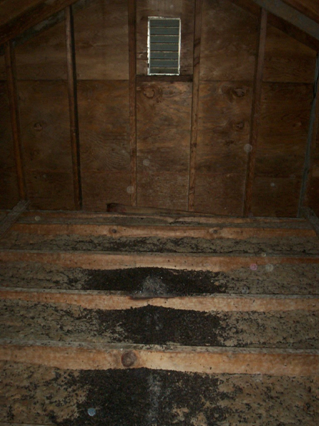
Bat Guano from Attic Infiltration
Insulation Replacement
Just like guano removal, insulation replacement is almost always recommended after bat removal. Bat guano droppings will contaminate the air space in your attic causing your attic insulation to become unhealthy and riddled with bat debris. Seitz Wildlife Services can contain and replace infected attic insulation quickly and effectively without causing further contamination throughout your home. We are experts at insulation replacement from a bat intrusion, and out work is 100% guaranteed!
What Are The Signs of a Bat Infestation?
The most obvious sign on a bat infestation is witnessing bats flying out of a home or building at dusk. Bats are creatures of habit and will return to the same roosting location each night. Over time bat droppings can accumulate in attics or can sometimes be noticed along walkways and on window sills. Other common complaints associated with a bat problem are squeaking noises in an attic , chimney, or wall, as well as bats frequently appearing in living quarters. Bats are nocturnal with activity being mostly at dusk and into the evening hours, this is the time of day most bat activity is noticed.
What is the biggest problem with a bat infestation?
Bats are one of Pennsylvania’s most beneficial creatures, but once they take up residence inside our homes it can become a serious problem. Bats eat their own body weight in insects every night causing their feces or guano to build up quickly over time. Bats guano looks like black, sticky rice and can contaminate attic insulation or other materials. Bat guano is know to produce mold spores, which if inhaled, can cause lung infections or a disease called histoplasmosis. Bat guano will quickly build up on walk ways, window sills or siding leaving behind stains and unpleasant odors.
Another problem involved with a bat infestation is actually having bats flying through your home or office on a regular basis. This can be unnerving not to mention a potential health risk. Once a colony of bats has found a suitable roosting site it can be difficult to deter them as bat repellent have little to no affect at all. Bat exclusion is the only long term solution to a bat infestation and will put an end to even the worst bat problems.
When is the best time to perform a bat exclusion?
Bats are a protected species in Pennsylvania and it is important to time a bat exclusion correctly to ensure the survival of the bat colony. By law bat exclusions can not be performed between June 1st and August 1st. This is the time maternity colonies of bats are raising their young and any disturbance could cause the mortality of this years young bats. Bat exclusions can be complete in the spring before the young bats are born , or after August 1st when the young bats are able to leave the roost with the rest of the colony. Hibernating bats colonies through out the North East are experiencing moralities from a disease called White Nose Syndrome, any further harm on this species should be avoided.
What is White Nose Syndrome?
White nose syndrome (WNS) is a disease that is causing mortality of bats (90 to 100 percent in some locations) at hibernation sites in the U.S. and Canada. An estimated 1 million or more bats have died of this mysterious illness so far.
What bat species are being affected?
So far, only bats that over winter communally in caves or mines- Little Brown Bats, Eastern Pipistrelle, Big Brown Bats, Northern long-eared Bat, Small-footed Bat, the Indian Bat. The fungus was recently reported in Pennsylvania.
What are the signs of White Nose Syndrome?
White fungus, usually on the nose , but can also be found on the wings, ears or tail. Not all affected bats have fungus.
- Bat flying outside during the day in the winter with temperatures below freezing.
- Dead or dying bats found on the ground, buildings, or other structures.
- Does White Nose Syndrome pose a risk to human health?
There are no reported human illnesses attributed to White Nose Syndrome. Federal and state agencies are investigating the disease but do not yet know if there is a risk to humans in contact with affected bats.
What should be done if you notice a sick or dead bat?
Any sick or dead bats seen should be reported to the Pennsylvania Game Commission right away to ensure the survival of this beneficial species in PA.
Pennsylvania Game Commission
2001 Elmerton Avenue
Harrisburg, PA 17110-9797
(717) 787-4250
The Bats of Pennsylvania are very beneficial to our environment and an important part of our ecosystem. A single bat can eat more than 1,000 insects every night and a colony of bats can control the population of insects. All bats of PA are protected and great care should be taken while removing bats to ensure a healthy bat population in PA.
How Bats Enter Your Home
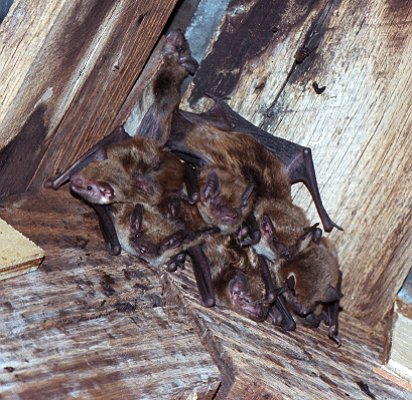
Bat Exclusion Can Prevent Seasonal Roosting
Bats can find their way into your house through any opening along the exterior structure. A chimney, unscreened vent, gaps and cracks along roof edges, or even an open door or window. Once a bat enters your home they become disoriented and lost. They will begin flying around your home erratically in an attempt to find their way back outdoors.
It is common for a colony of bats to choose a secure location like an attic or chimney to roost and raise it’s young of the season. This group of bats, also referred to as a “maternity colony “, will roost inside an attic and venture outside each night to feed on insects. They then will return before dawn to enjoy the security of their roosting site.
Once a bat is inside your home, they can pose serious risks. Bats are a potential exposure to rabies. They also leave behind unhealthy concentrations of bat droppings, also known as Guano, which can contribute to sickness and affect your indoor air quality.
How To Remove a Bat From Your Home
If you have a bat flying around the inside of your home, one of the best methods to remove it is to try and isolate it to one room. Once you are able to isolate the bat, open a window to allow the bat to get back outside. If the bat is continually flying around without exiting through the window, it will eventually become tired and give you an opportunity to remove it when it lands. Use a plastic Tupperware or similar container to carefully capture and relocate your intruder.
If your bat intruders have found a suitable roosting site in your home, it will be difficult to deter and remove them without taking the proper steps. Bat Exclusion, or Bat Proofing, is the act of sealing all possible entry points along the exterior of a structure in order to prevent future bat infestations. After every potential point of entry has been sealed, an exclusion device or “one way door” can be installed to allow the bats to exit your property while preventing re-entry.
When attempting to remove a bat from your home, please keep the following in mind. Bats are a protected species in Pennsylvania. It is illegal to poison or purposely harm bats. If completed correctly, bat exclusion is a safe and humane way to remove bats that have invaded your home or business for years to come.
Properly Timing a Bat Eviction or Exclusion
It is important to complete bat exclusion at a time of year that ensures success and complies with state law. In Pennsylvania, it is illegal to evict a bat colony from their roosting site during the time when female bats are caring for their young. This time of year is around the middle of May until August 1st of each year.
Bat exclusion can be performed in the early spring when the bats are first emerging from their winter hibernation. A one way door can be installed during March and April, however once birthing season is underway it is illegal to evict bat colonies.
By August the young bats have grown enough to fly and exit the roost with the adult bats and it is safe to evict the colony. Most bat exclusion work is usually performed during August through October when the young are grown and the bats are most active.
Frequently Asked Questions About Bat Removal
When is the best time of year to perform a bat exclusion?
In Pennsylvania, it is illegal to perform bat exclusions between June 1st and August 1st. That window is when maternity colonies are raising their young, and any disturbance during those months could cause the death of that year's pups. Exclusions can be safely performed in early spring before the young are born, or after August 1st once the young bats are strong enough to leave the roost with the rest of the colony. Most exclusion work happens between August and October.
What are the signs of a bat infestation in my home?
The clearest sign is watching bats fly out of a building at dusk — bats are creatures of habit and return to the same roost each night. Other common indicators include droppings (guano) accumulating in the attic, along walkways, or on window sills; squeaking noises in the attic, chimney, or walls; and bats appearing inside living areas. Because bats are nocturnal, most activity is noticed at dusk and into the evening hours.
Is bat guano dangerous?
Yes. Bat guano looks like black, sticky rice and can quickly contaminate attic insulation, walkways, window sills, and siding. Guano produces mold spores that, if inhaled, can cause lung infections or a disease called histoplasmosis. Anyone who must go near bat droppings should wear a mask with a HEPA filter. Guano removal should always be handled by a licensed professional because of the health risks involved.
Are bats protected by law in Pennsylvania?
Yes. Bats are a protected species in Pennsylvania, and several species are listed as endangered. It is illegal to poison or purposely harm bats, and exclusion work must be timed correctly to avoid harming maternity colonies. White Nose Syndrome has already caused major bat mortality across the Northeast, so additional harm to the species needs to be avoided. All of our bat removal work is humane and compliant with PA law.
How does bat exclusion actually work?
Bat exclusion is the process of inspecting and sealing every possible entry point along the exterior of a structure to permanently prevent future invasions. After the entry points are sealed, an exclusion device — also called a one-way door — is installed at the primary access point, allowing bats inside to exit but preventing them from re-entering. Bats can squeeze through extraordinarily tiny gaps, and exclusion typically requires high ladder work and construction skills, which is why it should be handled by a professional. We back our bat exclusion work with a long-term guarantee against future infestations.
What should I do if a bat is flying around inside my house?
If a single bat has gotten inside, the best approach is to isolate it to one room, then open a window so it can fly back outside. If the bat doesn't exit on its own, it will eventually tire and land, at which point it can be carefully captured in a plastic container and released outdoors. Never attempt to handle a bat with bare hands — bats are potential carriers of rabies, and any physical contact should be avoided. If contact occurs, the bat may need to be captured alive for rabies testing through the county health department. When in doubt, call us.
Do bat repellents work?
No. Bat repellents have little to no effect once a colony has chosen a roosting site. Exclusion is the only long-term solution to a bat infestation. We never use poisons or harmful chemicals — our exclusion work is fully humane and complies with all state regulations protecting bat populations.
Will I need an attic clean-out after the bats are removed?
In most cases, yes. The aftermath of a bat infestation often leaves the attic dirty, contaminated, and in need of a professional clean-out. Guano can saturate insulation and other materials, polluting the air inside the home. Our team performs a thorough attic inspection, identifies any wood paneling, flooring, or insulation that needs replacement, and completes the clean-out using high-quality materials — restoring the attic and significantly improving air quality.